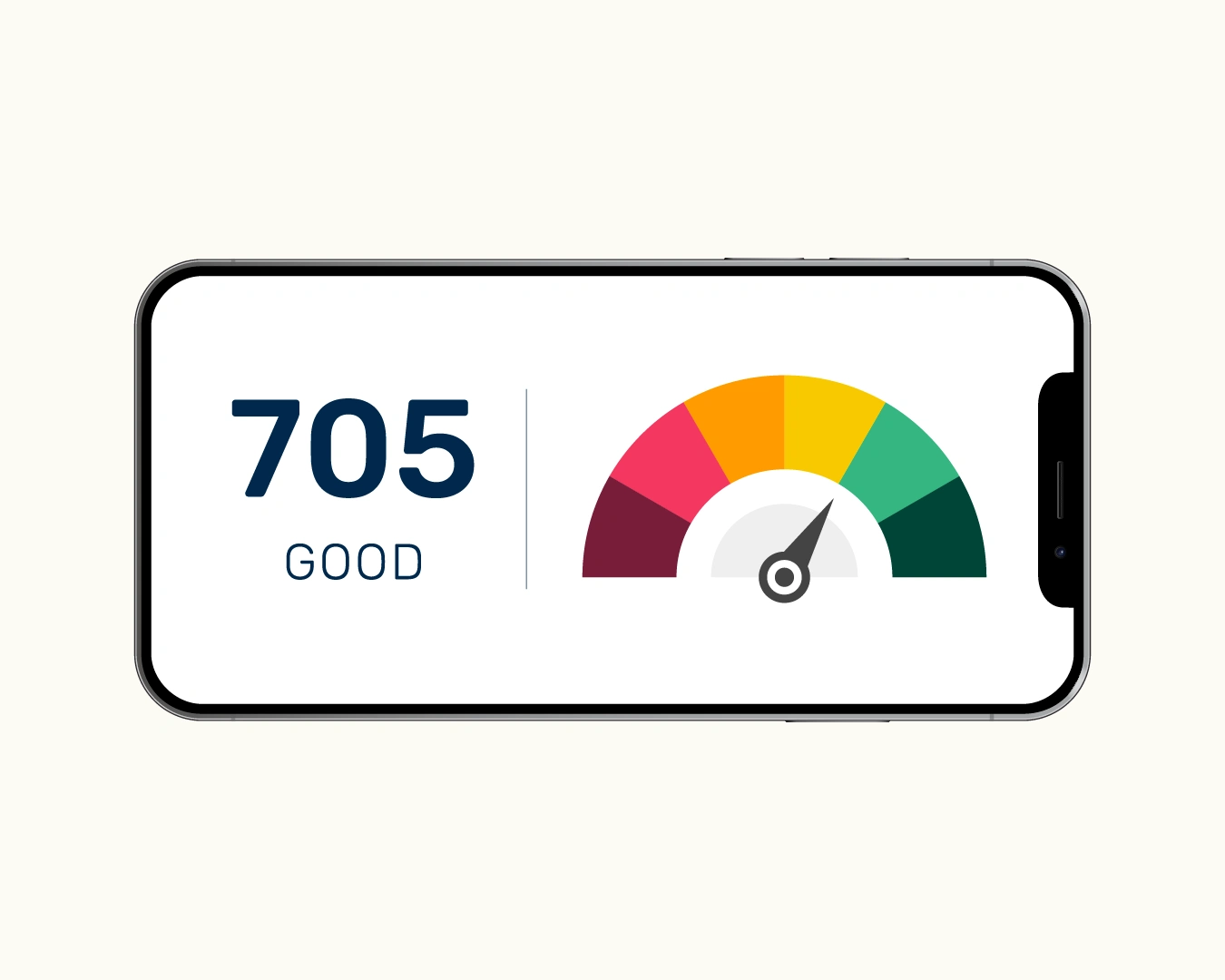
A good credit score can help you qualify for loans and credit cards more easily. It may also help you secure lower interest rates, receive better insurance premiums and increase your approval odds for rental housing. Credit score monitoring can help you stay informed about your credit and spot changes that may affect your financial future.
Do you know your credit score? Did you know that you have access to view it anytime, anywhere within online + mobile banking?
Viewing your score is only the first part. Keep reading to see how you can use this digital tool to help improve your score and even get a custom loan offer. Sign up for credit score monitoring today:
- Online banking: Login > Financial Wellness > Credit Score Monitoring
- Mobile banking: Login > More > Financial Wellness > Credit Score Monitoring
Quick links:
What affects your credit score?
Before we get into the benefits and features of the free credit score monitoring tool, let’s take a look at what factors determine your credit score.
- Payment history: The most important factor. Consistently making payments on time helps your score, while late payments, collections, bankruptcies, and other negative marks can significantly lower it.
- Credit utilization: This measures how much of your available revolving credit you are using. Lower utilization rates generally indicate responsible credit management and can positively impact your score.
- Length of credit history: A longer credit history provides lenders with more information about your borrowing habits. Older accounts and a higher average account age can benefit your score.
- Credit mix: Having experience with different types of credit, such as credit cards, auto loans, mortgages, and personal loans, may demonstrate an ability to manage various forms of debt.
- New credit activity: Opening several new accounts within a short period or having multiple hard credit inquiries may temporarily lower your score, as it can indicate increased borrowing risk.
See your debt-to-income ratio
Debt-to-income (DTI) ratio is the percentage of your gross monthly income that goes toward paying monthly debt obligations, such as loans, credit cards and housing costs. Lenders use DTI to assess your ability to manage payments and repay new debt. A lower DTI generally indicates stronger financial health.
You can view your DTI in credit score monitoring. You’ll be able to see a breakdown of what part of your monthly budget goes to paying off debt and recommendations on how to lower your DTI.
View custom loan offers
Looking for a new car? Want to consolidate debt with a personal loan or credit card? Based on your credit score, you’ll receive customized loan offers within this tool. Rates are based on the term-length of the loan you choose, and a calculator is available so you can estimate your monthly payments.
If you’re ready to apply, you’ll be taken to our quick online loan app. Need help? Just start a live chat at the bottom-right corner of your screen.
Take action on improving your credit score
Looking to improve your score? You have access to a number of tools and features within credit score monitoring that can help you.
- Set up an action plan: Get an analysis of your credit usage and recommended actions to help improve your credit score.
- Take a financial checkup: Answer a few questions and you’ll see your score, a budget analysis, and tips to help improve your financial wellness.
- Receive alerts: See what changed on your score and learn how you can improve your financial wellness. The tool monitors your credit report daily and will alert you of key changes.